Cost-Plus vs. Fixed-Price Custom Home Construction
A truly custom home should evolve around your vision—not be restricted by a predetermined list of specifications, allowances, and upgrades.
Two Ways to Build a Custom Home
Both cost-plus and fixed-price agreements can deliver an exceptional custom home. The main differences are how the price is established, how financial risk is allocated, and how changes are managed.
Cost-plus: You pay actual project costs plus an agreed builder’s fee. The budget guides decisions, while the final cost depends on the work completed, selections made, and terms of the agreement.
Fixed-price: You agree to a price for a defined scope of work. This provides greater upfront price certainty for that scope, while changes, allowances, exclusions, and unforeseen conditions may affect the final amount.
The right choice depends on your priorities, how complete your plans and selections are, and how you prefer to manage financial uncertainty.
How the Two Approaches Compare
Cost-Plus
Funds can be redirected between budget categories as priorities evolve.
Actual project costs are documented and shared with the homeowner.
New ideas can be evaluated and incorporated as construction progresses, subject to practical constraints.
Savings in actual costs can remain available to the homeowner, subject to the agreed fee structure.
Unused contingency funds can remain unspent or be reallocated, depending on the agreement.
Fixed-Price
Changes to predetermined selections may require contract adjustments.
The homeowner agrees to a contract price rather than paying directly against documented actual costs.
Changes may trigger change orders, additional charges, and scheduling implications.
The builder generally retains savings below the agreed lump-sum price unless the contract provides otherwise.
Risk allowances may be included in the contract price without separate reconciliation to the homeowner.
Inspiration Strikes When You Least Expect It
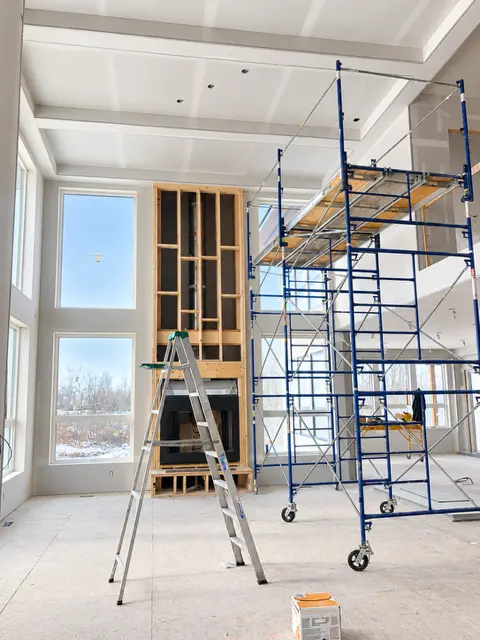
There is a fundamental difference between designing a home on paper and standing inside it as it comes to life.
Architectural drawings can illustrate dimensions, proportions, and layouts. But they can't fully capture the experience of standing in your future great room, feeling the scale of the ceilings, watching natural light move through the windows, or appreciating the views beyond.
And sometimes, that's when inspiration strikes.
At Great Oak Homes, we believe the custom building experience should be fluid, organic, and collaborative. Homeowners should have the opportunity to experience their home as it takes shape and refine their vision along the way.
Your Budget Should Guide Your Decisions,
Not Restrict Your Vision
Flexibility and financial discipline can work together.
A properly managed cost-plus project begins with a detailed, realistic budget. That budget provides a framework for comparing choices, tracking costs, and understanding what remains available.
When one selection comes in below budget, those savings may create room to invest elsewhere. You can direct more toward the features you value most while working within the same overall target, provided the savings cover the full cost of the change.
It’s about having the freedom to decide where your money delivers the greatest value.
That flexibility still requires timely decisions. Changes involving structural elements, permits, completed work, or long-lead materials can add costs and delays under either contract model.
Flooring
Cabinetry
Who Benefits When Construction Costs Come in Below Budget?
Every construction budget includes estimates, allowances, and provisions for expenses that may or may not materialize.
Under a traditional fixed-price contract, the homeowner agrees to pay a predetermined amount for the completed home. If the builder delivers the project for less than anticipated, those savings generally remain with the builder unless the contract specifically provides otherwise.
A properly structured cost-plus agreement works differently.
Because the homeowner pays documented actual construction costs plus an agreed builder's fee, savings in individual budget categories can remain available to the homeowner, subject to the terms of the agreement.
The same principle applies to contingency funds. Rather than automatically becoming part of the builder's margin, unused funds can remain unspent or be redirected toward other priorities.
This creates an important distinction: the builder and homeowner can work together to manage costs transparently, rather than treating every budget allowance as an amount that must be spent.
Ready to Build a Home Around Your Vision?
A truly custom home deserves a building process that puts your priorities first. Let's discuss your plans, explore your options, and show you how our transparent cost-plus approach can bring your vision to life.
Schedule a Consultation
Custom homes thoughtfully designed and carefully built throughout Oakville, Burlington, Collingwood and the Blue Mountain area.